Loft Conversions · Essex
Loft Conversions
That Add Real
Bedrooms & Value.
Dormer, hip-to-gable, mansard and L-shape loft conversions across Essex. Proper headroom, building-reg-compliant stairs, fire safety done right, finished to the same standard as the floors below. Fixed written quote, building control coordinated.
35+ Years On The Tools · Fixed Written Quotes · Same-Week Surveys
Service Overview
Loft Conversions —
The Brief, In Plain English.
What It Is
A loft conversion turns under-used roof space into a fully habitable floor — typically a master bedroom and en-suite, two children's bedrooms, a teenage suite or a home-office-plus-guest-room. Common Essex configurations include dormer (adds vertical wall and headroom at the rear), hip-to-gable (squares off a hipped end into a vertical wall, usually combined with a rear dormer), mansard (full restructure of the roof for maximum space, almost always planning), and L-shape (two dormers joined at right angles over a rear extension).
Who It's For
Essex homeowners who've outgrown the house but love the location, families needing another bedroom and bathroom without losing garden to an extension, owners wanting a self-contained master suite away from the main bedrooms, and homeowners considering a sell-or-extend decision who want the highest return-on-investment route to staying.
When You Need It
Before you outgrow the house completely. Most loft conversions take 8–12 weeks on site so they need planning into your year. Best to start before the second child arrives, not after, and before a new kitchen — pulling a kitchen apart after you've just refitted it is the wrong order of operations.
Why It Matters
Loft conversions go wrong when the rules around headroom, stair regulations and fire safety are treated as optional. A loft 'conversion' that leaves you crouching at the eaves, with a stair that doesn't meet Part K, or with no proper fire-protected escape route, isn't a habitable room — it's a building-reg failure waiting to be discovered the day you try to sell. Done properly to current regs, a loft conversion adds two bedrooms and a bathroom and a chunk of value the house will hold forever.
What Happens If You Wait
The Cost Of
Doing Nothing.
A 'loft conversion' that doesn't meet current building regulations is worse than no conversion at all — because at sale your buyer's surveyor flags it and you lose the value plus the cost of remediation.
Risks Of Ignoring It
- →Stairs not compliant with Part K headroom or pitch — failed building control sign-off, full re-stair required.
- →Insufficient floor joist depth for the new live loads — bouncy floors, ceiling cracks on the floor below.
- →No fire-rated doors or compliant fire-escape route — your buyer's surveyor flags it, conveyancing stalls.
- →Insulation laid wrong way round (between rafters with no breathable membrane) — condensation in the roof void and timber rot.
- →Velux or dormer flashing badly detailed — water tracks into the new bedroom every heavy rain.
- →No building control completion certificate — major price-chip at sale, sometimes refusal-to-lend by the buyer's mortgage company.
Common Mistakes Customers Make
- ×Trying to fit a 'cheap' staircase that doesn't meet Part K to save floor space below — it'll fail inspection.
- ×Skipping the structural calculations for floor joists and steel beams.
- ×Treating fire doors as decorative — they're life-safety kit and they need to be the right rating, properly hung.
- ×Choosing a roof-light-only conversion when a dormer would have given you usable headroom — saving 10% to lose 50% of the space.
- ×Not booking the building control inspector at the right stages.
Our Process
First Call To
Final Sign-Off.
01
Loft Survey
Internal measure-up of available headroom, rafter and joist sizes, water tank and chimney positions, electrical routes — confirms which conversion type makes sense for your roof.
02
Fixed Quote & Design
Itemised written quote, simple drawings showing the new floor layout, dormer or hip-to-gable spec, and a planning/PD assessment so you know if an application is needed.
03
Structural & Watertight
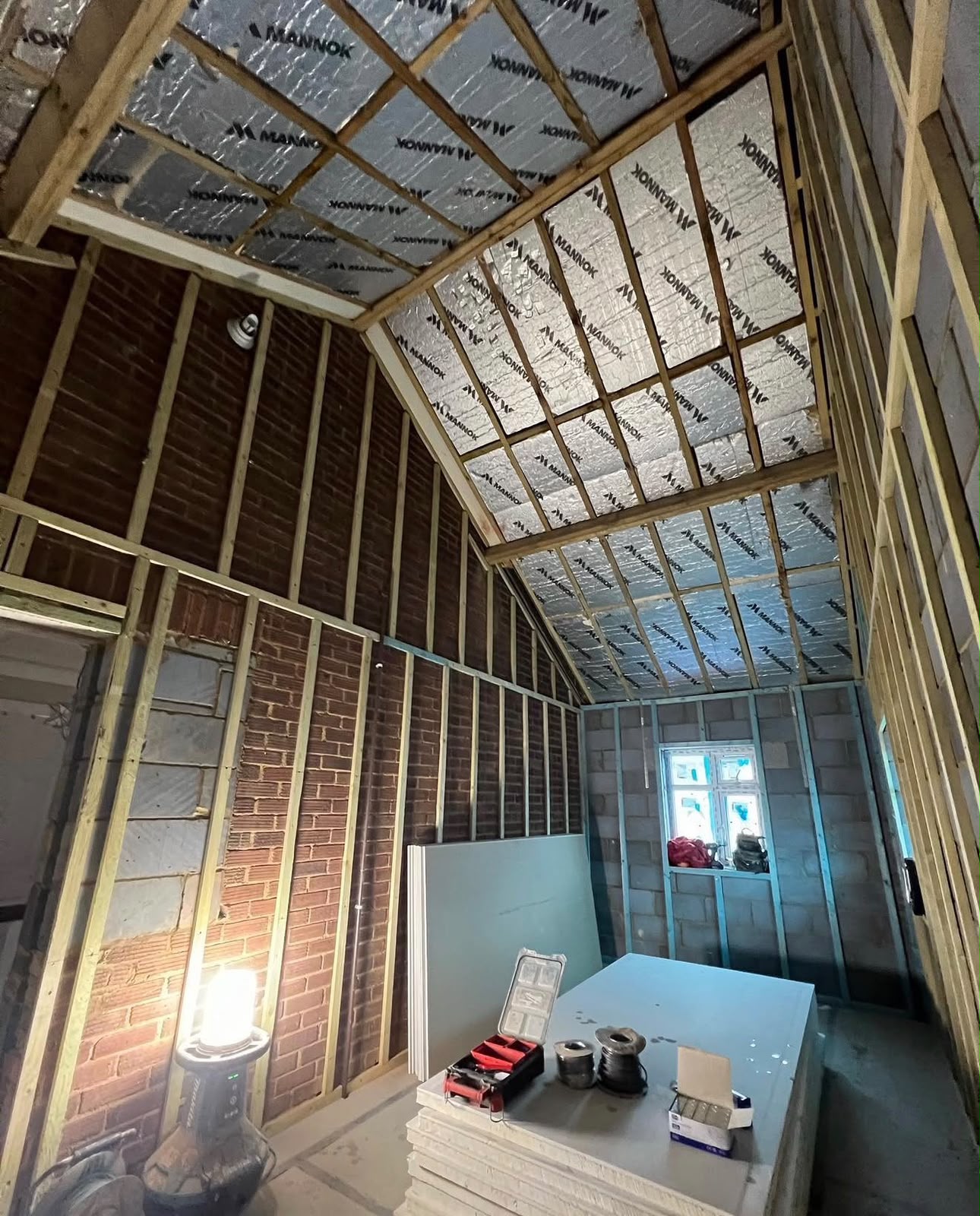
Floor joists and steels installed, dormer or hip-to-gable built out, roof made watertight, Veluxes fitted, insulation installed correctly with breather and vapour membranes.
04
First & Second Fix
Electrical and plumbing first fix, stair installed, plasterboard and skim, fire-rated doors hung, en-suite fitted, sockets, radiators, lighting, decorations.
05
Sign-Off & Handover
Final building control inspection — structural, fire, insulation, stairs all signed off — completion certificate and handover pack.
Why It's Worth It
What You
Actually Get.
Two Bedrooms + En-Suite
Most Essex semis and terraces can support a full master suite or two kids' bedrooms with a shared bathroom — usable, not crouching-at-the-eaves.
Building-Reg Compliant Stairs
Part K compliant stair with correct headroom and pitch. Passes building control, doesn't get flagged at sale.
Fire Safety Done Right
Fire-rated doors on bedrooms, mains-linked smoke alarms, protected escape route. The non-negotiables that save lives and pass inspection.
Properly Insulated
Insulation specified to current Part L between rafters and on warm-roof build-ups with breathable membrane — warm in winter, no condensation in the void.
Real Value Added
A correctly converted loft typically adds 15–20% to property value across Essex — substantially more than the build cost. The single highest-ROI project in most homes.
Building Control Certificated
Completion certificate handed over at sign-off — material when you remortgage or sell.
In Detail
Loft Conversions —
Every Variation Covered.
Materials, methods and the situations each variation applies to — so you know what you're buying before you buy it.
Working across
Grays · Thurrock · Basildon · Billericay · Rochford · Romford · Upminster
Full Service Area MapDormer Loft Conversions
The Essex workhorse. A flat-roof or pitched-roof dormer built out from the rear slope creates vertical walls and full headroom across most of the new floor. Usually permitted development if you stay within the volume rules. Suits most terraced and semi-detached Victorian and post-war housing stock.
Hip-To-Gable Conversions
On a hipped-end roof (most semis), squaring off the hip end into a vertical gable wall transforms the available floor area — usually combined with a rear dormer for a full L-shape result. Almost always needs planning permission because of the alteration to the roof line, but worth it for the space gained.
Mansard Conversions
Full restructure of the roof slope into a near-vertical wall — maximum head height and floor area, almost always needs planning, and a longer build programme. Common in older Essex stock where the existing loft is too shallow for a dormer alone.
L-Shape Conversions
Two dormers joined at right angles over a rear two-storey extension or a back-addition. Common in Victorian terraces. Highest space gain of the dormer family, more complex roof carpentry, longer programme.
Velux-Only Conversions
Where headroom and roof pitch already work, a Velux-only conversion (rooflights only, no dormer) is cheaper, planning-free and quicker. Suits steeper-pitch roofs with existing decent headroom. We'll tell you honestly at survey whether your loft is in that category.
En-Suite & Wet Room Lofts
Most master-suite lofts include a small en-suite or wet room — drainage, tanking and ventilation all need proper design because of the height the soil pipe is running. We coordinate the plumbing route at survey so you don't get surprised by visible pipework on the floor below.
Recent Projects
Loft Conversions —
Recent Builds.
Questions
Straight
Answers.
Cost, timeline, lifespan, lead times — the questions everyone asks, answered before you call.
Ask YoursHow much does a loft conversion cost in Essex?
+
Cost scales with conversion type, en-suite scope and finish — a Velux-only conversion is materially different from a hip-to-gable with full L-shape dormer. We give fixed written quotes after a loft survey, itemised by structure, dormer, stair, services and finishes.
How long does a loft conversion take?
+
Velux-only conversions typically 6–8 weeks. Standard rear dormer 8–12 weeks. Hip-to-gable and L-shape 12–16 weeks. Mansard 14–18 weeks. We give you a dated programme up front rather than a 'few months' guess.
Do I need planning permission for a loft conversion?
+
Dormer rear conversions usually fall under permitted development if they stay inside the volume rules (40 m³ for terraces, 50 m³ for semis and detached). Hip-to-gable and mansard usually need planning. We tell you straight at the loft survey.
Will the new stair eat my landing space?
+
Stair position is the single most important early decision. We measure the existing landing, plan the stair into the smallest viable footprint while meeting Part K headroom and pitch rules, and show you the layout in simple drawings at quote stage. No surprises after we start.
Does my house need extra structural support?
+
Almost always — original loft joists are sized for ceiling loads, not bedroom floor loads. We install new structural joists between or alongside, with steel beams where the span requires. All sized by structural calculation and signed off by building control.
Will the loft be warm enough in winter?
+
Yes — insulation is specified to current Part L thermal regs, typically between rafters with continuous breathable membrane plus a warm-roof build-up at the dormer. Done properly, lofts run warmer than the rest of the house because heat rises.
Can we use it as a master bedroom with en-suite?
+
Yes — most Essex loft conversions are configured exactly that way. We coordinate the en-suite plumbing route, ventilation and waste so the result feels like part of the house, not a bolt-on.
Do you handle building control sign-off?
+
Yes — coordinated at the right stages (structural, fire, insulation, stairs) and the completion certificate handed over with the keys. That paperwork is what your conveyancer asks for at sale.
Do you stand behind your loft conversion work?
+
Yes — if something we built isn't right, we come back and put it right. Manufacturer guarantees apply to roof systems, Velux, doors and any installed kit, and the paperwork is bundled and handed over on completion.
Can we live in the house during a loft conversion?
+
Mostly yes. The dirtiest weeks are the initial structural opening-up and the stair install — for the rest, work happens above and outside. We hoarding off and dust-seal the access stair, and protect routes through the house every day.
Next Step
Want Two New Bedrooms Without Moving House?
Free site survey, fixed written quote inside 48 hours, no obligation. 35+ years on the tools, Grays-based.
Related Services